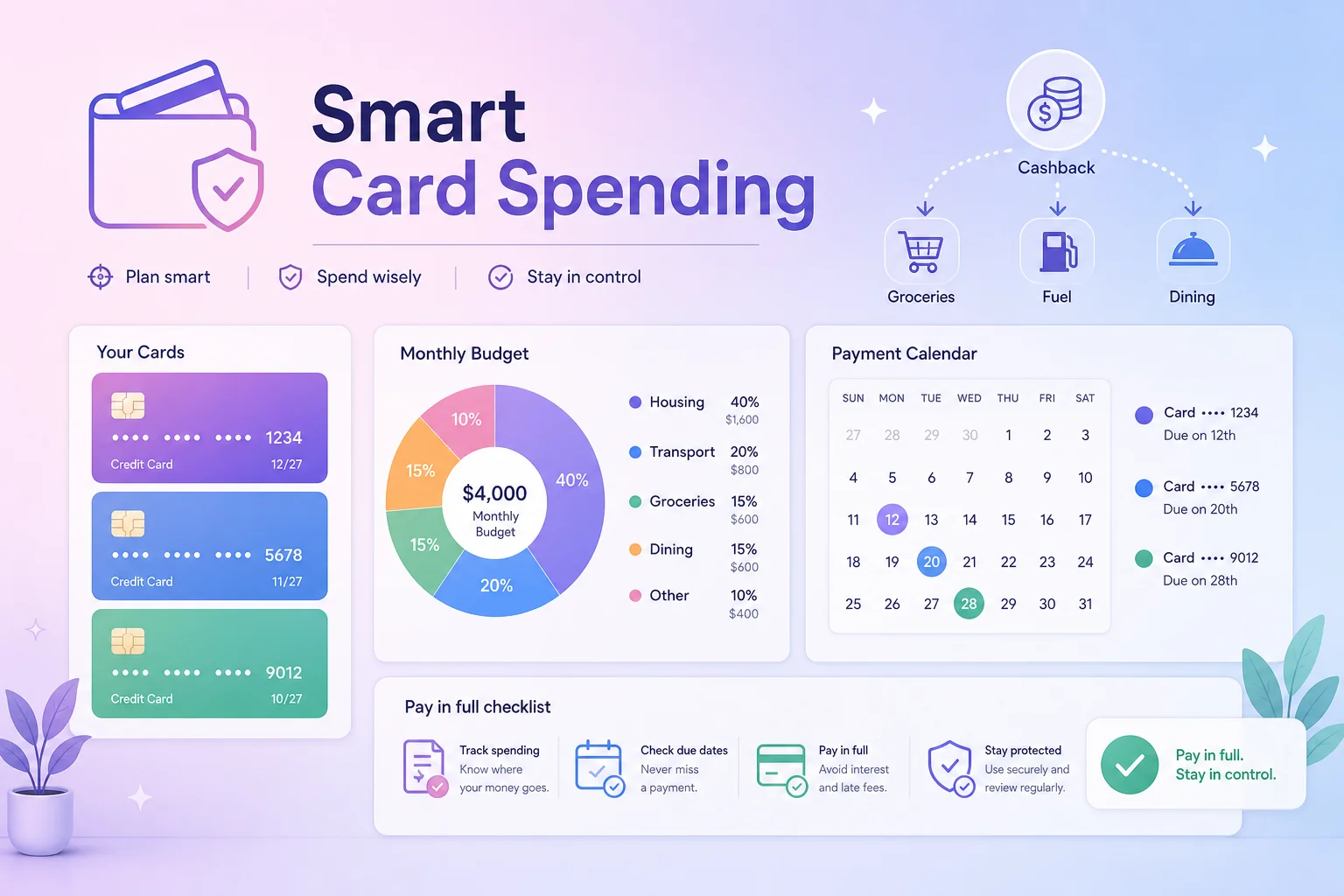
Optimizing Credit Card Spending Without Falling Into Debt
How to use credit cards as a cash-flow and rewards tool without turning everyday spending into high-interest debt.
A credit card can be a useful tool when used correctly: it adds short-term cash-flow flexibility, centralizes spending records, and can provide cashback or other benefits. Used poorly, it can also turn normal everyday spending into expensive high-interest debt.
My mindset is not "the more cards, the better." It is: each card needs a clear job, a spending limit, and a plan to be paid in full before the due date.
[!warning]
This article shares personal spending-management experience, not financial advice. Cashback rates, annual fees, foreign transaction fees, and reward rules change over time. Always check the latest fee schedule and terms before opening or keeping a card.
Why I still use credit cards
The main reason is cash-flow visibility. When most transactions go through cards, it is easier to review where money went this month, which categories exceeded the budget, and which categories can reasonably benefit from cashback or promotions.
The important part is not treating a credit limit as your own money. A credit limit is simply the amount the bank allows you to use first. If you do not pay the statement balance in full, the interest and fees can wipe out the value of any cashback.
A simple rule:
- If you cannot pay the full statement this month, do not put that purchase on a credit card.
- If you use installments, read the conversion fee, post-promotion interest rate, and penalty terms.
- If a promotion makes you buy something you were not planning to buy, it is no longer spending optimization.
Understand the statement cycle
Many people mistake "up to 45-55 interest-free days" as if every transaction gets that full period. In reality, the interest-free period depends on where the transaction falls within the statement cycle.
Basic terms:
| Term | Meaning |
|---|---|
| Statement date | The date the bank closes the billing cycle |
| Payment due date | The final date to pay and avoid interest/late fees |
| Statement balance | The amount that should be paid in full for that cycle |
| Minimum payment | The minimum amount to avoid delinquency, but the remaining balance may still accrue interest |
I prioritize paying the full statement balance, not just the minimum payment. Minimum payment is a fallback to avoid being overdue, not a smart way to use credit cards.
Give each card a clear role
If you have multiple cards, do not let them overlap too much. Each card should serve a specific spending category.
A practical split:
| Spending category | Card selection logic |
|---|---|
| Dining, coffee, entertainment | Use a card with good F&B or entertainment benefits |
| Supermarkets and convenience stores | Use a card strong in groceries or everyday spending |
| Online shopping | Use a card with e-commerce rewards or monthly vouchers |
| International services, SaaS, app stores | Prefer low FX fees, or benefits that clearly offset FX costs |
| Miscellaneous spending | Use a simple baseline card with stable cashback |
The key number is net benefit, not just the headline cashback percentage. A card with high cashback but low caps, high annual fees, or difficult minimum-spending conditions may be worse than a simpler card with lower but reliable value.
Calculate the net benefit
Before keeping a card, I ask:
Annual net benefit = cashback/rewards I actually use
                   - annual fee
                   - foreign transaction fees
                   - installment conversion fees
                   - extra spending caused only by chasing promotions
If the result is unclear, the card may not be worth keeping. Optimizing credit card spending is not about owning more cards; it is about reducing the number of decisions you need to remember every month.
Set guardrails to avoid late payment
I usually use several guardrails:
- Set reminders a few days before the due date.
- Enable transaction notifications to catch unusual spending.
- Keep a self-imposed spending cap for each card, usually lower than the bank-approved limit.
- Review total outstanding balance weekly instead of waiting for the statement.
- Keep repayment money in a separate account when the month has large purchases.
If available, enable autopay for the full statement balance. If not, at least keep a fixed calendar reminder.
Common mistakes
Common mistakes I see:
- Opening a card for the welcome gift but ignoring next year's annual fee.
- Swiping several cards and losing track of total spending.
- Using "0%" installments without reading the conversion fee.
- Spending extra just to hit a cashback threshold.
- Paying foreign-currency transactions without checking FX fees.
- Paying only the minimum and assuming the card is still interest-free.
A few of these mistakes can easily erase several months of cashback.
A simple tracking sheet
You can track cards with a very simple table:
| Column | What to track |
|---|---|
| Card name | Bank name or a nickname you remember |
| Role | What spending category this card is for |
| Statement date | Billing cycle close date |
| Payment due date | When payment is due |
| Annual fee | Whether it is waived or not |
| Actual cashback | The real cashback received after conditions |
| Notes | Conditions, minimum spend, FX fee, category limits |
I also keep a reference spreadsheet here:
Conclusion
Credit cards are useful only when they help you control spending better. If every card has a clear role, you know the total outstanding balance, you know the payment due dates, and the annual net benefit is worth it, cashback and rewards can be real value.
If using credit cards makes you spend more, miss due dates, or rely on minimum payments, it is better to reduce the number of cards, lower your self-imposed limits, and return to a simpler debit/cash budget until your spending is under control again.